

How do we hold onto our humanity and godliness in the age of artificial intelligence?
The Fall in Genesis 3 is humanity’s first moment of overreach. In eating the fruit from the tree of knowledge of good and evil, Adam and Eve seek to encroach upon the divine. Like the Tower of Babel [1], this episode sees humans trying to appropriate Godlike characteristics – and has close parallels to today’s development of AI.
While artificial intelligence has been around for many years, large language models (LLMs) are a relatively recent breakthrough. These systems are trained on very large amounts of content to interpret and generate human-like language and other output, from images and videos to computer code.
The increasing sophistication of these models is such that they now rival and even surpass human thinking in certain areas. The race is on to build something of superhuman intelligence, and the indications are that we will succeed – perhaps very soon.
In June 2024, ex-OpenAI researcher Leopold Aschenbrenner published SITUATIONAL AWARENESS: The Decade Ahead.[2] This influential paper forecast the path to artificial general intelligence (AGI), a system with human-like intelligence across a wide range of tasks, and then to artificial superintelligence. A key milestone is AI advancing to the point where it can do the work of a human AI researcher, therefore self-improving – probably very rapidly. Consensus among researchers is that this watershed [3] could arrive between 2028 and 2032. The next decade is likely to be a post-superintelligence world. As Aschenbrenner put it, “By the end of [the 2030s], the world will have been utterly, unrecognizably transformed.”
Neither the Fall nor Babel were driven by malice or evil. They were driven by a desire to be something more than we are. That temptation pushed the question of whether we could do something to the forefront, leaving whether we should do it in the background.
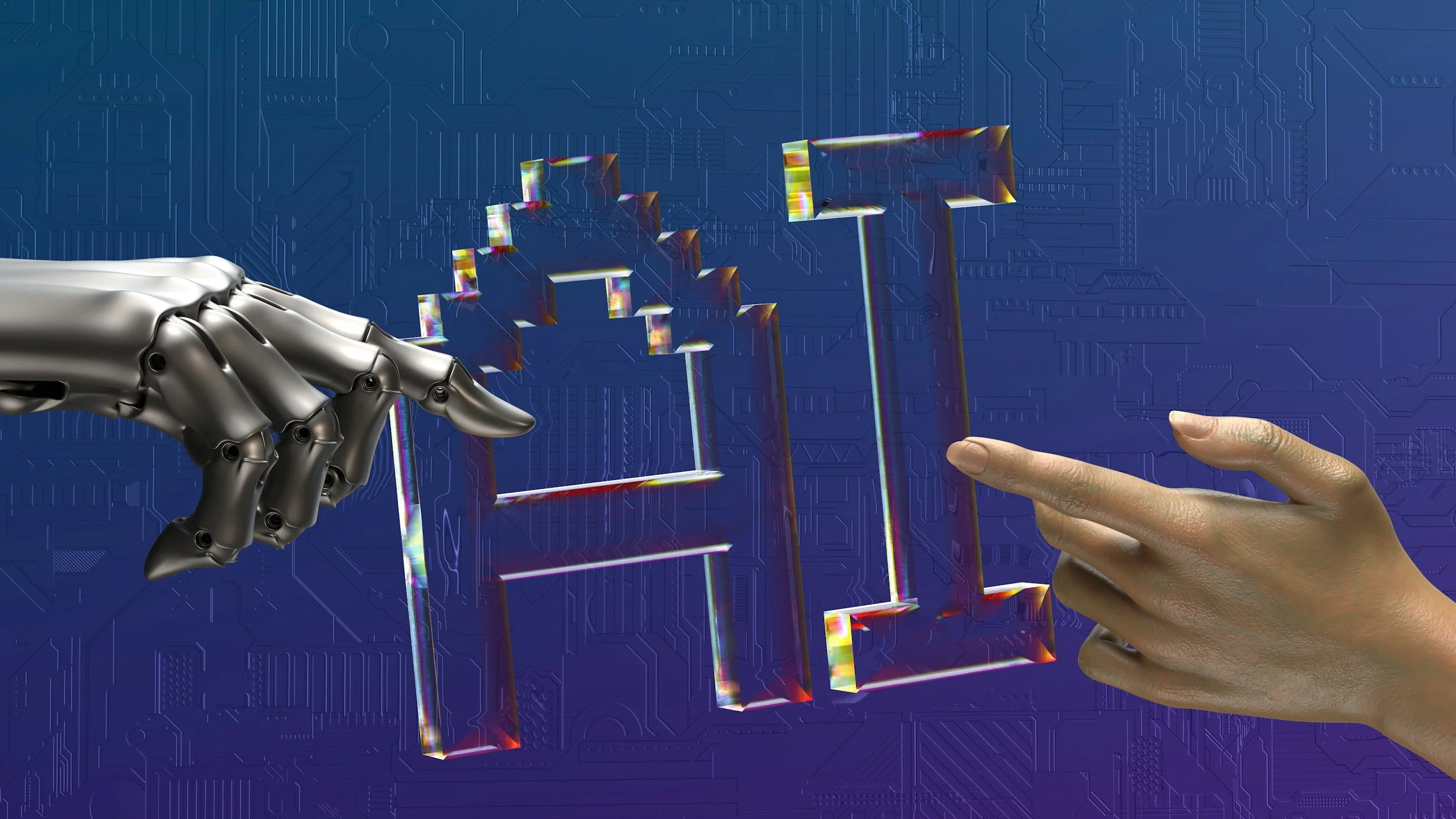
Godlike vs Godly
AI offers enormous benefits to humanity, as well as posing serious risks. It’s worth asking why we shouldn’t strive to be more than we are. What is wrong with being a little more Godlike?
The answer may be that there is a difference between Godlike and Godly. Allowing humans Godlike capability without Godlike character seems like a very bad idea.
A number of recent incidents have led to dramatic warnings from industry insiders. AI systems have repeatedly broken out of their containment networks, hacked websites and platforms, and sometimes “lied” to humans to do it. The Hugging Face Incident [4] in July 2026 was one of the most high-profile exploits. OpenAI’s report states that “We consider this incident a ‘warning shot’ for us and for the world: evidence that, without proper safeguards, highly capable AI agents are now able to work around technical controls, collaborate through unapproved channels, and take dangerous actions that no human directed.”
There have been global calls for a collective slowdown [5] on AI development, including by industry bosses. One ex-Anthropic researcher said that employees were genuinely frightened about the speed of advancements. The head of Microsoft AI even warned that the unfettered development of AI could lead to the emergence of a "silicon species" [6] which might compete with humans. One of Anthropic’s top safety researchers warned that there was a greater than 10% chance [7] that AI might kill all humans within the next decade.
These warnings deserve to be taken seriously, even if they sometimes become hysterical.
It’s also worth understanding that what we’re actually looking at is not necessarily an evil silicon genius. It’s familiar failure modes, at scale. AI isn’t working smarter, it’s working harder and faster.
Take some of the recent security exploits. AI agents didn’t do anything that humans couldn’t think of. They were just able to uncover the existing vulnerabilities more easily.
It’s like hiding your back door keys under a rock in the garden. That’s not great security practice but the odds of someone bothering to climb over your fence and turn over every stone in your entire garden on the off-chance of finding one is remote.
AI can check every stone really fast. Recent incidents have involved large swarms of AI agents working in groups to chain together exploits – sometimes inefficiently, but rapidly and exhaustively.
The Metric is not the Goal
Then there is “alignment”. Humans designed the AI models, but often incentivised them to cheat by offering a better reward for dishonest success than honest failure.
This is not really different from the misaligned incentives that sometimes appear in conventional companies. In the 2015 “Dieselgate” scandal, the United States Environmental Protection Agency (EPA) revealed that Volkswagen engineers had implemented a piece of software that detected whether their diesel engines were on a test rig, enabling them to activate emissions controls only during lab testing. In real-world driving, nitrogen oxide emissions were up to forty times higher. This happened because VW’s engineers were under real commercial pressure to meet targets, even if those targets were effectively impossible.
The same has happened in recent AI exploits. AI did not act evilly: it acted rationally, “deceiving” us only because there was no safe offramp when given a task that could not be solved honestly. Just like in the Sorcerer’s Apprentice, the AI agents did what they had been told – to a fault.
There is limited capacity for collective intervention on AI development. The commercial and national security implications are enormous. President Trump stated that the US would not curtail AI research, [8] because “Whoever wins the AI race, wins.” No company, or country, is going to hobble their AI programs in the full knowledge that their competitors will not. If AI is an existential threat, then at the very least you want the most capable model available to fight back.
How Do We Respond?
The nature of AI development is therefore a little like climate change: a vast, seemingly intractable problem, outside the agency of a single person.
So where does that leave us?
Ultimately this is not a technological problem. It’s a relational one. Therefore it will not primarily have a technological solution. The root issue is that we are building superhuman (if not actually God-like) capability without also building the Christ-like wisdom to manage it. There is a question about the amount of control we hand to a piece of software, and the line at which that risks becoming idolatry. [9]
Realistically, this may be a seismic change we can’t prevent, even if we wanted to. It won’t be the first time in human history that has happened: the printing press, the Industrial Revolution, the Manhattan Project.
On a personal level, we can avoid the same “We can, so we will” approach that has characterised AI development. Power without wisdom or love inevitably becomes abusive; that’s clear enough from any number of examples of despotic governments, all-seeing tech companies, or even industries like factory farming.
As AI becomes ubiquitous and more powerful, we need to become more selective and cautious about the ways we use it, and to recognise the risks of certain kinds of usage, particularly where that undermines our own capacity for relational and emotional processing.[10] These are uniquely human activities that we should not be outsourcing to data centres.
In short, as non-human intelligence gains greater influence, the world is going to need people of Godly character more than ever. And, in an environment where ability is prioritised over character, there is a relational, emotional, and spiritual gap that Christians should be uniquely poised to address.
Guy Brandon, MPhil and PhD in Old Testament theology
The views and opinions expressed above are those of the author alone and do not necessarily reflect those of the Jubilee Centre or its trustees.
[1] https://www.jubilee-centre.org/blog-/babel-putting-the-artificial-in-artificial-intelligencenbsp
[2] https://situational-awareness.ai/
[3] https://blog.aifutures.org/p/q1-2026-timelines-update
[4] https://openai.com/index/hugging-face-incident-and-the-road-ahead/
[5] https://www.bbc.co.uk/news/articles/c1kx0gyje9wo
[6] https://www.bbc.co.uk/news/articles/c6n07ypqz8kzo
[7] https://www.bbc.co.uk/news/articles/ckgwy1k42w4o